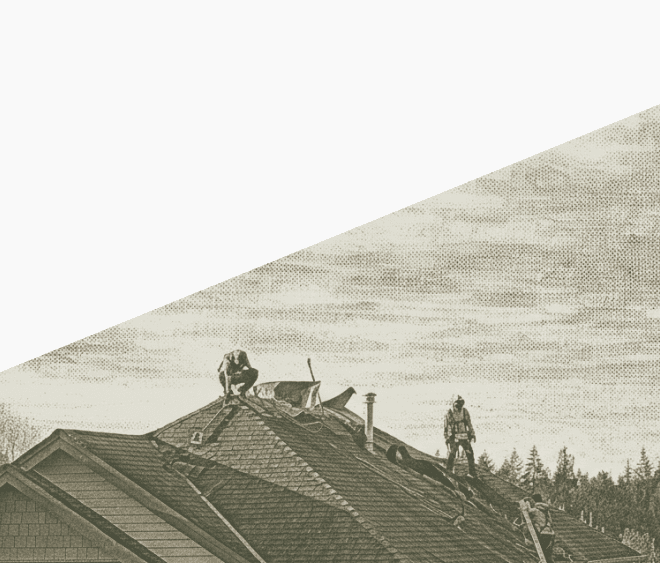
How to Tell If Your Roof Has Hail Damage
Telling whether your roof has hail damage requires a systematic inspection that starts at ground level and works up to the roof surface. The most reliable indicators are dented soft metals (gutters, vents, flashing), random-pattern granule loss on asphalt shingles, and collateral damage to other exterior surfaces like siding, window screens, and outdoor equipment. Insurance adjusters follow a specific protocol to distinguish hail damage from normal wear. Knowing what they look for helps you document a claim thoroughly and avoid missing damage that would otherwise go unrepaired.
Ground-Level Indicators
Before anyone gets on the roof, a ground-level walkthrough reveals whether hail struck the property. Start by checking these items:
Gutters and downspouts: Aluminum gutters are one of the most reliable indicators. Hail dents in gutters appear as round or oval depressions along the top edge and the front face. They follow a random pattern. Manufacturing creases or dents from ladders are straight lines or concentrated in one spot. Hail hits are scattered.
Window screens and frames: Metal window screens show hail impact as small tears, punctures, or dimples. If screens on multiple sides of the house are damaged, it confirms hail fell across the property and was not limited to wind-driven debris from one direction.
Siding: Vinyl siding cracks on impact. Aluminum siding dents. Wood siding shows round impact marks. Check siding on all sides of the house. The windward side during the storm typically shows the most damage.
AC units, mailboxes, and outdoor furniture: Any painted or metal surface outdoors can show hail strikes. Dents on the top of an AC condenser unit, paint chips on a metal mailbox, or cracked plastic on patio furniture all support the claim that hail hit the property.
On-Roof Inspection: What to Look For
The on-roof inspection is where the actual claim gets established. Here is what experienced inspectors evaluate:
Soft metal accessories: Check every roof vent, exhaust cap, pipe collar, and metal ridge cap. These are the easiest damage to identify and the hardest for a carrier to dispute. A round dent in an aluminum box vent is unambiguous hail evidence.
Shingle surface: Walk the roof and look for dark spots where granules have been knocked off. Run your hand over suspect areas. A hail-bruised shingle feels soft or spongy at the impact point compared to the firm, granulated surface around it. This tactile test is one of the most reliable identification methods.
Random vs uniform pattern: Hail damage appears randomly across a roof slope. If the damage follows a line (like along a walkway or near a valley), it is more likely foot traffic or mechanical damage. Hail does not discriminate. It hits everywhere the sky is exposed.
Test square: Experienced inspectors use a test square by marking off a 10-by-10-foot area with chalk and counting individual hits within that boundary. The hit count per square determines the severity and scope. Multiple test squares on different slopes give a complete picture.
Distinguishing Hail Damage from Other Conditions
Not every mark on a shingle is hail damage. The most common conditions mistaken for hail include:
Blistering: Shingle blisters are caused by trapped moisture or volatile gases in the asphalt that expand in heat. They look like raised bubbles. When the blister pops, it exposes the mat underneath, which can resemble hail damage. The key difference is that blisters have a raised edge and a crater-like shape, while hail hits create a flat or slightly concave depression with displaced granules around the impact zone.
Foot traffic: Scuff marks from walking on a roof displace granules in a directional pattern, usually following a line from the ladder to the work area. The marks are elongated rather than round.
Manufacturing defects: Some shingles leave the factory with granule voids or inconsistencies. These appear as uniform bare spots, often in the same location on multiple shingles from the same bundle. They lack the random distribution of hail damage.
Normal aging: Old shingles lose granules uniformly across the entire surface as the asphalt dries and contracts over time. This is gradual and even, not localized to random impact points.
When to Call a Professional
If your ground-level inspection turns up dented gutters, cracked siding, or other collateral evidence, it is worth having a professional inspect the roof. A roofing contractor experienced in insurance restoration can identify damage patterns that homeowners miss and can document findings in a format that supports a claim.
Public adjusters are another option. They work for the policyholder and conduct their own independent inspection, write their own estimate, and negotiate with the insurance carrier on your behalf. Their fee is typically a percentage of the claim settlement.
For contractors who are already working the claim, getting the adjuster's PDF estimate into Xactimate quickly is critical for identifying missed items. CapOut converts the adjuster's PDF into your Xactimate account in minutes, not hours, letting you review every line item and build your supplement for what the initial inspection overlooked.
Documenting Your Findings
Good documentation protects the claim from the initial filing through any disputes. Photograph every piece of evidence: dented gutters, damaged vents, individual shingle hits, and collateral ground-level damage. Use a coin or chalk circle next to each hail strike for scale reference. Take wide-angle photos of each roof slope plus close-ups of individual damage points.
Record the storm date and pull weather data from the National Weather Service to confirm hail was reported in your area. Note the hail size if available. This data, combined with your physical evidence, creates a claim file that is difficult to dispute.
Related Guides
About the author
Matt FrugeFounder & CEO, CapOut
Matt Fruge is the Founder and CEO of CapOut. Before CapOut he spent 15+ years running Roofmark Construction in Dallas-Fort Worth and lived the exact pain his product solves: re-keying Xactimate estimates while jobs sat waiting. U.S. Navy veteran. Based in Fort Worth, Texas.
More from MattFrequently asked questions
If you are not experienced walking on roofs, do not do it yourself. Wet or damaged shingles are slippery, and a fall from a single-story roof can cause serious injury. A qualified roofing contractor or public adjuster can perform the inspection safely. Drone inspections are another option that avoids the need to get on the roof entirely.
Inspect as soon as it is safe to do so, typically within a few days of the storm. Early inspection preserves evidence before subsequent weather events obscure the damage. It also starts the clock on your insurance claim while the storm date is clear and verifiable through weather records.
Yes. Contractors who specialize in insurance restoration often have more experience identifying hail damage patterns than general adjusters who handle all claim types. If you believe the adjuster's inspection was incomplete, you can request a re-inspection or bring a contractor who can point out missed damage during a joint inspection.
Continue reading
Get insurance restoration insights
Practical tips on Xactimate, supplements, and estimating workflows. No spam.
Related glossary terms
Convert your first PDF to ESX free
Upload a PDF estimate and get a production-ready ESX file in under a minute.
Get Started Free
 No credit card required