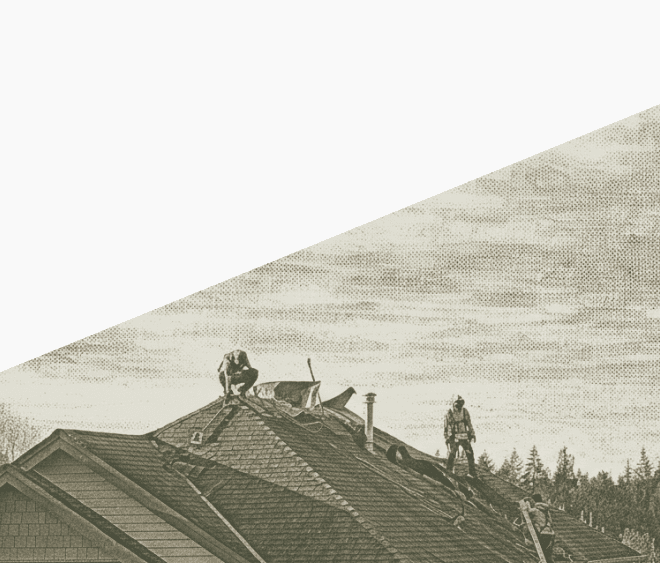
Hail Damage Roof Repair Cost
Hail damage roof repair costs depend on whether the damage requires targeted repairs to a limited area or a full roof replacement. Minor repairs such as replacing a few damaged shingles or a single dented vent are on the low end. Full replacement of an asphalt shingle roof after widespread hail damage represents the upper end of residential roof claims. The actual cost is determined by the roofing material, the roof's size and complexity, regional labor rates, and material pricing. Insurance covers hail damage under standard homeowner policies, with the homeowner responsible for the deductible.
Typical Cost Ranges
Hail damage repair costs fall into broad categories based on the scope of work:
| Scope | Description | Typical Cost Range |
|---|---|---|
| Minor repair | Replacing a few damaged shingles, one or two vents, or a section of flashing. Localized damage on one slope. | $300 to $1,500 |
| Moderate repair | Partial replacement of one or two roof slopes. Includes shingles, underlayment, and affected accessories on damaged slopes only. | $2,000 to $7,000 |
| Full replacement (standard) | Complete tear-off and replacement of all shingles, underlayment, drip edge, and accessories on a typical residential roof. | $8,000 to $20,000 |
| Full replacement (premium) | Full replacement using impact-resistant (Class 4) shingles, upgraded underlayment, and code-required enhancements. | $12,000 to $30,000+ |
These ranges cover a typical 1,500 to 2,500 square foot residential roof with standard asphalt shingles. Costs vary significantly by region. Markets with frequent hail activity (parts of Texas, Colorado, Oklahoma, Kansas, and the broader Midwest) tend to have competitive pricing due to contractor density, while markets with less frequent storms may see higher per-square pricing.
What Drives the Cost
Roof size: Roofing is priced per square (100 square feet). A larger roof requires more material and labor. A simple gable roof with minimal penetrations is less expensive per square than a complex hip roof with multiple valleys, dormers, and skylights.
Material selection: Standard architectural shingles are mid-range. 3-tab shingles are the least expensive. Impact-resistant (Class 4) shingles cost more but may qualify for insurance premium discounts that offset the difference over time. Metal, tile, and slate are significantly more expensive.
Roof complexity: Steeper pitches require more labor time and additional safety equipment. Roofs with many penetrations (vents, skylights, chimneys) require more flashing and detail work. Each valley, hip, and ridge adds linear footage of specialty materials.
Code requirements: Local building codes may require upgrades when a roof is replaced. Common code-triggered items include ice and water shield in specific areas, drip edge installation, minimum underlayment standards, and ventilation requirements. These items add cost but are covered under ordinance or law coverage if your policy includes it.
Tear-off: A full replacement includes removing the existing shingles and underlayment before installing new materials. Most jurisdictions limit shingle layers to two, and many contractors recommend tearing down to the deck regardless to inspect for hidden damage. Tear-off labor and disposal add to the total cost.
How Insurance Pays for Hail Damage Repair
The insurance claim payment depends on your policy type:
Replacement cost value (RCV): The carrier pays the full cost to replace the damaged roofing with materials of like kind and quality. The initial payment is the replacement cost minus depreciation and minus your deductible. After the work is completed and you submit proof, the carrier releases the recoverable depreciation as a second payment.
Actual cash value (ACV): The carrier pays the depreciated value of the roof. There is no second payment. The depreciation reflects the roof's age and remaining useful life. A 15-year-old roof on a 30-year shingle receives roughly 50 percent depreciation, meaning the initial payment covers about half the replacement cost minus the deductible.
The deductible structure also matters. A flat deductible (a set dollar amount) is straightforward. A percentage-based wind/hail deductible (common in storm-prone states) is calculated as a percentage of the dwelling coverage amount. On a home insured for $300,000 with a 2 percent wind/hail deductible, the deductible is $6,000.
Getting the Most from Your Claim
The adjuster's initial estimate sets the baseline for the claim payment, but it is not necessarily the final number. Adjusters work from what they observe during one inspection visit. Damage they did not see does not make it into the estimate.
Filing a supplement for missed items is standard practice. Common supplement items on hail damage claims include overhead and profit (when three or more trades are involved), code-required upgrades, accessory items like pipe boots and attic vents that were not individually listed, and matching provisions when the existing shingle has been discontinued.
To build an effective supplement, you need the adjuster's estimate in Xactimate format for a line-by-line comparison. CapOut converts the adjuster's PDF into your Xactimate account in minutes, not hours, letting you see exactly what was scoped and add what was missed.
Related Guides
About the author
Matt FrugeFounder & CEO, CapOut
Matt Fruge is the Founder and CEO of CapOut. Before CapOut he spent 15+ years running Roofmark Construction in Dallas-Fort Worth and lived the exact pain his product solves: re-keying Xactimate estimates while jobs sat waiting. U.S. Navy veteran. Based in Fort Worth, Texas.
More from MattFrequently asked questions
Yes. Hail is a named peril covered under standard homeowner insurance policies. The policy covers the cost of repair or replacement minus the deductible. Whether the carrier scopes a repair or full replacement depends on the extent and distribution of the damage across the roof.
You are responsible for the deductible, which is the amount you agreed to pay before insurance coverage begins. Some policies have a separate wind/hail deductible that is a percentage of the dwelling coverage (often 1 to 5 percent) rather than a flat dollar amount. Under an ACV policy, you also absorb the depreciation because it is non-recoverable.
The carrier sends an adjuster who inspects the roof, documents the damage, and produces an estimate in Xactimate using regional pricing data. The estimate includes material costs, labor rates, and quantities based on the adjuster's measured scope. This estimate becomes the basis for the claim payment.
Continue reading
Get insurance restoration insights
Practical tips on Xactimate, supplements, and estimating workflows. No spam.
Related glossary terms
Convert your first PDF to ESX free
Upload a PDF estimate and get a production-ready ESX file in under a minute.
Get Started Free
 No credit card required