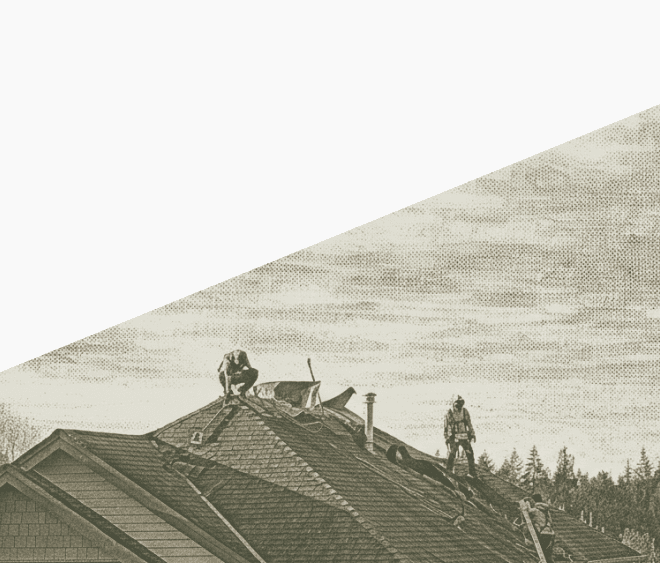
Impact Resistant Shingles (Class 4)
Shingles engineered to withstand hail impact, tested and rated under UL 2218 with Class 4 being the highest rating. These products qualify for insurance premium discounts in most states.
Specifications
| Testing Standard | UL 2218 (Standard for Impact Resistance of Prepared Roof Covering Materials) |
| Class 4 Test | 2-inch steel ball dropped from 20 feet, two impacts on same spot, no fracture |
| Insurance Discount | 5% to 28% premium reduction depending on state and insurer |
| Available From | GAF (Timberline AS II), Owens Corning (Duration FLEX), CertainTeed (Landmark IR), Atlas (StormMaster), TAMKO, IKO |
Common issues
- Homeowners assuming Class 4 shingles are hail-proof rather than hail-resistant
- Not verifying with the insurer that the premium discount is applied after installation
- Replacing a Class 4 roof with a non-Class 4 product after a claim, losing the insurance discount
Insurance relevance
Class 4 impact-resistant shingles are the most significant product category for insurance-related roofing decisions. Many states, including Texas, Colorado, Kansas, Minnesota, and Oklahoma, mandate that insurers offer premium discounts for UL 2218 Class 4 roofing. The discount typically ranges from 5 to 28 percent of the annual premium, which can amount to hundreds of dollars per year. Over a 30-year roof life, the cumulative savings often exceed the cost of upgrading to a Class 4 product. When a Class 4 roof is damaged and replaced under a claim, the replacement should also be Class 4 to maintain the discount, and this should be reflected in the Xactimate estimate.
What Are Impact-Resistant Shingles
Impact-resistant shingles are asphalt shingles engineered to withstand hail impacts without fracturing, tearing, or losing their waterproofing integrity. They are tested under UL 2218, the industry standard for impact resistance on prepared roof covering materials. The standard defines four classes based on progressively larger steel ball impacts, with Class 4 being the highest. Class 4 shingles must survive two impacts from a 2-inch steel ball dropped from 20 feet on the same spot without showing a fracture or tear on the back of the shingle. To achieve this performance, manufacturers use polymer-modified asphalt (typically SBS, or Styrene-Butadiene-Styrene), reinforced fiberglass mats, or both. The modified asphalt increases flexibility so the shingle absorbs the impact energy rather than cracking like standard oxidized asphalt.
UL 2218 Testing Explained
The UL 2218 test is straightforward. Steel balls of specified diameter are dropped from a 20-foot height onto the shingle sample. Class 1 uses a 1.25-inch ball, Class 2 uses 1.5 inches, Class 3 uses 1.75 inches, and Class 4 uses 2 inches. The shingle is impacted twice in the same location, then the back of the shingle is inspected for fracture, tearing, or cracking. If the back shows no damage at a given class level, the shingle passes that class. The test is conducted at room temperature on a flat substrate. It is important to understand that this is a controlled laboratory test. Real-world hail varies in size (sometimes exceeding 2 inches), shape (irregular versus round), density, and velocity (which can exceed the drop-test velocity due to wind). Class 4 is the baseline for insurance discounts, not a guarantee against all hail damage.
Available Products
Every major shingle manufacturer offers at least one Class 4 product. GAF offers the Timberline AS II. Owens Corning offers the Duration FLEX. CertainTeed offers the Landmark IR. Atlas offers the StormMaster Slate and StormMaster Shake. TAMKO and IKO also have Class 4 options. These products typically cost 10 to 20 percent more per square than the same manufacturer's standard architectural shingle. The cost premium is offset by the insurance discount over the life of the roof, making Class 4 shingles a financially sound upgrade in states that mandate or offer significant hail discounts.
Insurance Discounts and Claim Implications
The primary financial benefit of Class 4 shingles is the insurance premium discount. Many states require insurers to offer a discount for UL 2218 Class 4 roofing, with the reduction typically ranging from 5 to 28 percent of the annual premium. Over a 30-year roof life, this discount can total thousands of dollars, often exceeding the upfront cost premium of the Class 4 product. Homeowners should submit proof of the Class 4 installation (the manufacturer's product data sheet and the contractor's invoice specifying the product) to their insurer to activate the discount. When a Class 4 roof is replaced after a covered storm loss, the replacement should also be Class 4 to maintain the discount. This is a critical detail for contractors and adjusters to include in the Xactimate estimate. If a non-Class 4 product is installed, the homeowner loses the discount going forward, which is a significant financial impact the homeowner should be informed about before the replacement material is selected.
Frequently asked questions
Class 4 is the highest rating under the UL 2218 test standard. The test drops a 2-inch steel ball from 20 feet onto the shingle surface. To achieve Class 4, the shingle must show no fracture, tearing, or cracking after two impacts on the same location. Class 1 through Class 3 use progressively smaller steel balls (1.25 inch, 1.5 inch, and 1.75 inch). Class 4 is the only rating that most insurers recognize for premium discounts.
Insurance premium discounts for Class 4 shingles vary by state and insurer, typically ranging from 5 to 28 percent of the annual premium. Texas and Colorado are among the states with the most significant discounts. The exact savings depend on the policy, the insurer, and the specific state regulations. Homeowners should request a written quote from their insurer showing the discount amount before making a purchasing decision.
Yes. Class 4 shingles are hail-resistant, not hail-proof. They are designed to withstand moderate hail impacts, typically from hailstones up to approximately 2 inches in diameter, without sustaining functional damage. Larger hailstones, extreme velocity impacts, or repeated impacts in the same area can still cause damage. The UL 2218 test uses a standardized steel ball in a controlled environment, and real-world hail varies in size, shape, density, and velocity.
Convert your PDF to ESX
Upload a PDF estimate. CapOut processes it and sends it directly to your Xactimate account.
Get started free
 No credit card required